
Secondhand
a Cyberpunk Detective Noir set in New Chicago

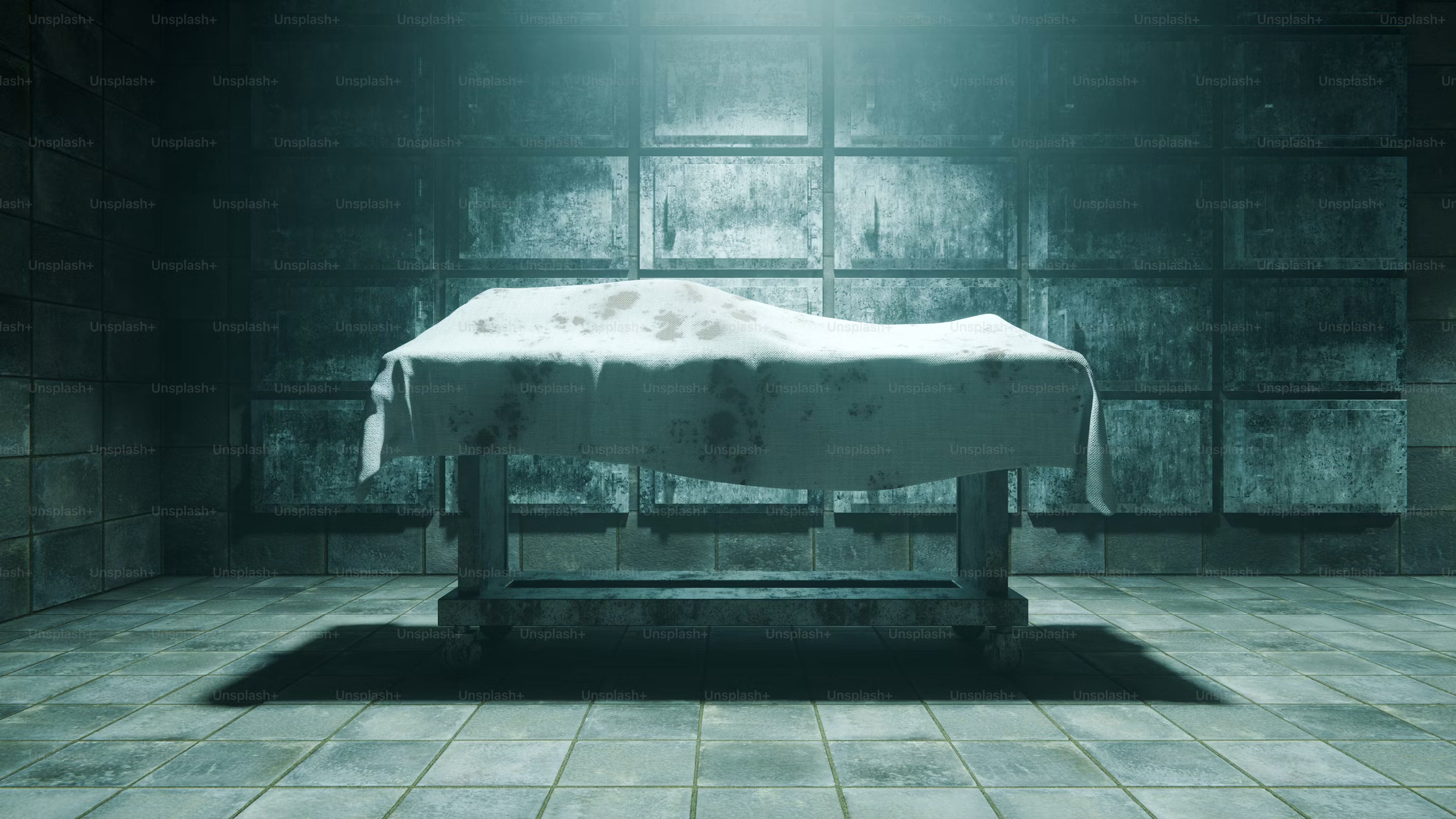
“I’ve already seen the autopsy photos. I don’t need it.”
“Photos?” She exploded. “By God, you do, Mac!”
Flipping back the sheet. “And it’s HER. Not it.”
The young girl’s body lay on the metal tray, exposed under the bright lights. It was obvious that the bruises, cuts and burns covering her pale skin were delivered while she was still alive. I hoped she was unconscious by then. I knew better.
I made myself stare; that’s part of the job. Tried not to imagine the blows. In that too, I was lying.
“Cover her up Laura… please.” I gestured weakly.
She glared at me, then relented and gently covered the body again. Sliding the drawer back into the cold vault.
“I wanted you to see her.” Closing the door. “Personally.” Click.
“Jane Doe Three is in the system.” I already knew what she thought about that name.
“Bullshit! It’s bullshit Mac.”
I lowered myself to the edge of her desk. Scrubbed a hand across my face, unable to meet her eyes. I hated morgues. Every detective says you get used to them. Every detective who says that is lying.
Exhaled. “Look Laura…”
Chief Med Examiner Laura Gorman stepped into my space before I could finish. “Mac. I mean it. You know they’ve got more. The chip’s gone.” Shoved her gloved hand against my chest - strong, despite giving up half a foot and 60 pounds. “Where is it, Mac?”
I shook my head, finally meeting her eyes. “I’ve been told to lay off this one… well… all of them. ImmDiv’s handling it.”
“It’s not my case anymore.”
She took half a step back. “They’re saying all the girls are immigrants?”
I shrugged. “Laura… Laura…” She ignored me and dropped into her chair, touching her data screen. Focused.
Seemed like a good time to disappear. I stood and stepped towards the door. Glancing back at her, deep in thought.
She’s smart. If there’s something there, she’ll find it.
I just hoped it didn’t cost me my pension.
***
I almost made it out of the station before my personal mmail pinged. I pulled it up on my HUD –
[LG1989] Mac. They were all missing their medata chips. No ID. No vitals, nothing. And all physically tortured.
I engaged subvocal. Responded as I exited the CPD.
[Mac02556] Laura. Again. Not. My. Case.
Lake wind knifed between the towers. I pulled my synthleather trench closer and walked down the concrete steps to my waiting patrol car, ordered from the depot when I left Laura’s office. Checked my current case directions, logged them in the system and the car headed out – drug bust of some sort on Idlewhile: scan prints, log bodies, collect weapons, the normal routine.
[LG1989] I’m not letting this go.
Traffic was, as usual congested. The frantic mix of cheap electrics. Imports. Luxcars. Delivery drones overhead. Jockeying for position in a race to the end. The AI found its way through. Chicago PD priority, a minor perk.
[Mac02556] You should. It’s coming from the top. Don’t flatline your career over this, you can’t save them now.
[LG1989] There’s gonna be more.
[LG1989] You know there is.
[Mac02556] I have to go.
***
It was a typical low rent apartment. Two-day-old quick ramen cups on the tables, mismatched furniture, broken fixtures. Bullet holes stitched across the living room walls. And the bodies and blood spray of course.
The forensic tech was crouched over the closest one and looked up as I entered.
“Hey Mac.”
“Joey.” I nodded at him. “What’s the story?”
“The usual.” He stood, dusting his department-issued pants. “The way I see it, boys had a little disagreement over the drugs.” He pointed to the scarred coffee table, still holding a torn bag of spilled pills. “Molly3 probably, but the lab will confirm.”
“Both the pills and the boys were packing and…” he jerked his head towards the one sprawled, arms akimbo over the ragged sofa. “He got the worst of it, so probably two against one.”
The body was nearly torn in half. “Using cutters I suppose?”
Joey nodded, glancing at the ugly tears in the drywall. “Looks like it. Every street idiot’s favorite round, but hey… you’re the detective.”
“Do we have IDs yet?”
“Was just about to do that.” Joey swept his handheld wand over the neck, then the sides and back of the nearest body. It pinged when it found the data implant. He looked at the readout.
“Yeah. Chip’s intact. Cutters didn’t get to it.”
“Run the others. Send it to my file with the vids. Tech’ll handle the decrypt requests.”
“You got it Mac.”
I took one last look around the apartment. Guns on the floor were cheap street pieces, ghosts with no serials. Ammo however might be traceable.
“Fourth one in the last two weeks” I murmured mostly to myself as I examined the body Joey hadn’t scanned yet. Lightly modified, so not likely cyberpsychosis.
“Maybe a new gang moving in?”
“Maybe.” I took a few hi-rez while Joey finished up, nodded to the beat cop stationed outside, then headed for a coffee. Or a bourbon. I always thought better in a dive.
***
I tossed my overcoat onto the vinyl bench, then slid into the booth beside it. Mardi brought me a coffee and a slice of the cherry pie, while I hunched over the datapad, reviewing the crime scene. She knew my routine by now. She just set it down and left me alone.
I toyed with the fork between index and middle fingers. Back when I smoked, this would have been a time to light up, but I’d quit it three years back. It still ate at me.
The metal of the datapad lay cold in my hand. My fingers walked through the screens while my mind went elsewhere. I retrieved my messages. Only the one from Laura was of interest.
[LG1989] I looked at Jane Doe Three again. Then the other two. We need to talk.
I used my private line to call. Her face was haggard on the screen.
“Mac.” She looked to the side. Checking. Her voice low.
“I took a closer look at the girls. Whoever removed the chips knew what they were doing. Minimal incisions. They removed the chips from the socket and sealed it over, so they weren’t noticed until we tried to scan for them.”
“So, a talented ripperdoc?”
“Or someone with above average medical training. Or a lot of practice.”
“That’s unusual. Why remove the chips? Unless they were worried about tracking?” I sipped the coffee. Black.
“If they were immigrants, they probably weren’t paying for that. Just the basic chips from Chi City Admin.”
“Yeah. And they wouldn’t have telemetry”
“You’re probably right Mac, but one of CPD’s data analysts could tell you more.”
“Hmm.” I took a bite of the pie. “Laura, I really don’t need to be working this case…”
“Mac… you owe me…”
“I know. I know.” I took another bite and another sip. “I know a guy. One who could help. But you gotta promise me Laura… don’t make waves. Keep it on the down low.”
“I will. Thanks Mac.”
I nodded, looking absently at Madi.
“They deserve names,” She added quietly.
I ended the call. The coffee had gone cold, and the pie sat heavy.
“Laura. What are you dragging me into…?” I mumbled and set down the fork.
I needed more answers, but the questions had to come first. Back to the street…
***
The ramen cart hugged the side an old catholic church. The doors had been shuttered for years, but it still made a useful wind break. I noticed Leon leaning against the brick wall, along with half a dozen others avoiding the cold rain. This little side street boasted four other food vendors competing for their business. But it was noodles that Leon wanted.
“Leon”
“Mac. Been awhile.” He pulled his heavy but well-worn coat tighter around his midsection. It was probably the cold, but he could also have been concealing a weapon. Better to assume that with Leon. He’d spent the majority of his fifty-odd years on the street and it showed.
I ordered two bowls brimming with broth, noodles and mystery meat, then carried them steaming back to his little piece of the wall. It wasn’t sleeting yet, but could turn that way pretty quickly. We slurped in silence for a few minutes, savoring the warmth, if not the taste, watching the busy streets nearby and the neon reflections.
“So Mac, what can I do you for?”
“You hear about immigrants disappearing?
“Hear about it every week.”
“That common?”
“They come here broke. No family. No ties. Some stay. Most, I guess. Some go back – those that can afford to.” He sipped his broth. “Others… well. They stop showing up.”
I nodded. “What about ripperdocs?”
He raised an eyebrow. “That’s a jump. What about them?”
“The ones that work off the books.”
“Shit Mac, every third basement’s got someone that’ll open you up.”
“I mean the good kind.”
Leon snorted. “Them? Might be five or six good ones in all of New Chicago. Ones you could trust to put you back together, and with both your kidneys intact.”
I let that settle and ate a few more noodles. Yeah, it was starting to sleet.
“How about medata chips? Is there a market for them?”
This one earned me a side-eye. “How do you mean?”
“Anyone buying medata chips?”
“Buying?” He laughed. “Nobody’s buying them.”
Leon slurped more of the broth and shook his head, “No. But they are selling them.”
“Why? What for?”
Leon tapped the side of his neck. “Placeholders.”
“Like aliases?”
“Like if you get scanned by CPD, you are somebody else. Somewhere else. Says you’re home watching vids.”
“Ah. Alibis.”
He smiled. “Now you got it.”
“Expensive, I would presume?”
“If you have to ask you can’t afford it. And it has to be installed right and proper.”
“One more question.”
“Mac. It’s getting late. It’s cold and I don’t have a good place to spend the night.”
I reached into my coat and made a quick transfer of a few hundred creds into his account.
His wrist buzzed, he glanced at it and said “That bought you another question.”
“No Leon. That bought me an answer.”
“Okay…”
“I need a name and locale for a good ripperdoc. Someone who’ll talk to me.”
“I can give you a name.” He paused. “But I can’t guarantee he’ll talk to you.”
“What have you got?”
“Romanov. You can find him in Little Russia.”
“That’s pretty generic, Leon. Where specifically?”
“There’s a tea shop there. South end. Samovar’s the name.” He looked around, then lowered his voice. “But don’t ask for him, ask for the Winter Blend.”
“Seriously?”
He shrugged. “Russians like drama.”
“And if he doesn’t show?”
“Then enjoy the tea.”
Leon handed me his empty bowl, buttoned his coat further and disappeared into the sleet before I could ask another question.
Hmm. Laura wanted names. Maybe Romanov had one to give me.
***
The CPD offices were quieter than usual, not quiet, just quieter. The city ran 24/7. One AM was just another hour in the day. Crime never stopped. Neither did we.
The third floor held the tech section. Ernesto’s office was more like a large converted storage room. Three monitors covered one wall. Two more sat on the desk surrounded by empty jolt cans and chip bags. Coffee wasn’t a draw for Ernesto, even espresso lacked enough caffeine.
He sat, eyes glued to the monitors, as though he hadn’t moved since I last spoke to him six days ago. Might have been wearing the same clothes as well. I tried not to get close enough to smell if I was right. He had glasses halfway down his nose, as he typed with one hand and ate chips with the other.
“Ernesto.”
He looked up. Took him a second to drag his attention away from the monitors.
“Detective McPherson!” His face lit up. “Perfect timing. I had just processed your homicide requests.”
“Drug apartment?”
He tapped the screen of one monitor, leaving a faint fingerprint, then spun it toward me.
“Three confirmed IDs. Chips decrypted without any problems. Once we got authorization.”
“Good.”
“They were all Chi City Admin basic medata. The lowest - Tier 0. Identity, medical history, prescriptions, allergies, blood type, emergency contacts.”
“I’ll have the ID’s crosschecked against previous criminal records, but I suspect we’ll find some.” I frowned at the screen. “Too bad they can’t store criminal records. Would save me additional legwork.”
Ernesto paused. “Well, technically, the hardware is capable of that, and more.”
.“Go on.”
His eyes brightened. Ask him one question and he’d answer the next twelve without prompting. The exact opposite of Leon.
“Storage is the limitation. Processing isn’t.”
He spread his fingers wide over his head.
“ A standard medata chip samples only a tiny fraction of your electrical impulses. Enough to identify you, track your medical condition, record changes doctors might need later.”
He shrugged. “Make the storage bigger...”
“...and?”
“...you can save more.”
“More what?”
“Almost anything you can measure. Biometrics. Hormone levels. Heart rate. Electric activity. Sensory input…”
I cut him off, “What do you mean, sensory?”
“You know…sight. Sound. Balance. Touch. Taste. Smell.’ He ticked them off on his fingers. “They’re all electrical signals eventually. The problem isn’t recording them. It’s fitting them somewhere.”
He tapped a spot behind this ear twice. “This thing only has enough capacity for basic medical information collected over a lifetime… to record full sensory telemetry...”
“...how long?”
“It would depend on the compression.”
I leaned against the doorframe and folded my arms. “Okay…”
“Detective, I have no idea. Not my area of expertise. But probably not long. Few hours?”
“Could someone build one? Like that? With enough capacity?”
“Theoretically.” He hesitated. “The chip would be extremely difficult, but not the hardest part. Making it survive implantation would be.”
“You know the drill, Detective McPherson, everyone receives the same standardized neural slot around sixteen. Thousands of surgeons install them every day. However, the tolerances are microscopic. Modify the interface wrong and the nervous system rejects it.”
“Worst case?”
Ernesto shrugged. “Seizures.” Another shrug. “Stroke. Probably death.”
He picked up his can of liquid caffeine, “If somebody actually built what you’re describing...”
And took a swig “...they’d need one hell of a chip designer.”
Another gulp “...and an even better ripperdoc.”
Romanov.
***
The tea room occupied the ground floor of an aging brick building next to an actual watch repair shop that somehow still existed. Above the door, painted in worn gold lettering was the name SAMOVAR. It wooden letters worn smooth by years of Midwestern weather.
It was ten-thirty the next morning. Early by New Chicago standards, but late enough for the night crowd to be finding breakfast.
When I entered, conversation stopped. Every head in the room turned my way. Appraising.
Maybe ten people occupied the room, no more than a quarter of the tables were occupied. I noted older men with newspapers, two women talking quietly over steaming cups. A young couple sat with heads close together. Everyone looked like they belonged here.
Except me.
I took a table beside a window framed with lace curtains yellowed by age. Outside, traffic drifted past in the perpetual winter haze of New Chicago. While inside, porcelain cups clinked softly against saucers. Slowly conversations resumed around me. Russian surrounded me from every direction. I understood none of it.
A waitress appeared without a menu. “What can I get you?”
At least it was English.
“The Winter Blend.”
One eyebrow climbed just enough for me to notice. She nodded once and then disappeared.
Five minutes later she returned, balancing a cast-iron teapot painted with blue flowers, a porcelain cup, and a pastry dusted with powdered sugar that looked almost too good to eat. She set everything in front of me.
The tea surprised me. Real leaves. Without synthesized flavoring. Actual tea. It was wonderful.
I poured another cup before trying the pastry. It was flaky. Warm and sweet. I took another bite. I wondered if the CPD reimbursement policy would cover this extravagance. Probably not.
My only complaint was the chair. It rocked enough to be annoying. Or maybe it was the floor.
Twenty minutes passed before anyone acknowledged me again. A shadow settled across the table and I looked up.
The man waiting there was built like he’d been assembled from spare parts, but only the good ones. Thick shoulders strained the seams of a charcoal coat that probably cost more than my rent. His expression was polite enough. It was the kind of polite that assumed you’d be cooperative.
He inclined his head. “I understand you requested a particular blend.”
“I was told this is the only place in New Chicago that serves it.”
A faint smile appeared. “Please follow me, Detective.”
So much for subtlety.
He led me through a narrow doorway behind the counter, down a short hallway, and into a private dining room, separated from the café by thick oak doors. It was quiet but not comforting. A single table occupied the center, already set for tea for two.
Romanov sat waiting.
Silver threaded through his dark hair. His suit fit perfectly without advertising what it cost. He looked more like a megacorp businessman than one of the city’s most exclusive ripperdocs. Two large men stood against the wall behind him. Neither bothered pretending they had any opinions about tea.
Romanov gestured to the empty chair opposite him. “Detective McPherson.”
I took a seat. For a long moment, neither of us spoke. We simply measured each other.
Romanov lifted his teacup with both hands, studying the steam for a moment before taking a measured sip.
Apparently, I was expected to begin. “You have a very nice place.”
“Thank you. Did you enjoy the tea?”
“I did.”
“And the pastry?”
“It was excellent.”
He waited. Apparently, he was patient as well. “I appreciate you taking the time to meet with me.”
“I was curious why a detective wished to speak with me.” His English was nearly flawless with only the faintest trace of a Russian accent softening a few words.
“I’m investigating a homicide.”
“Oh?” he didn’t sound that interested.
“I was told you’re one of the finest cyber physicians in New Chicago.”
Romanov smiled faintly. “People often exaggerate.”
“Usually negatively, I’ve found.”
That earned the slightest lift of an eyebrow. “I’m hoping you can answer a medical question.”
“If I can.”
“How difficult is it to modify a standard medata interface?”
Romanov regarded me over the rim of his teacup. “Tell me Detective – have you ever performed surgery?”
“No.”
He set the cup gently onto its saucer. “Most people believe surgery is about steady hands. Now, machines can hold a scalpel perfectly still.” He shook his head. “But making the cut is the easy part.”
“It is about knowing precisely where not to cut.”
I stayed silent. Most people can’t stand silence. I could. Smart people loved silence.
“The body is remarkably forgiving of some mistakes. And also remarkably unforgiving of others. The neural interface belongs in this second category.”
“So modifying one isn’t routine?”
“There is nothing routine about it.” His voice remained calm. “Every patient is different. Every nervous system has its own peculiarities. The smallest miscalculation can leave a person blind... unable to speak... unable to move.”
He spread one hand slightly. “Or dead.”
“You’ve seen that happen?”
A shadow crossed his face. “Medicine is a profession that teaches humility, Detective. Every physician who practices long enough has had… incidents.”
The room fell quiet. I could hear the ticking of a mechanical wall clock somewhere.
“So, anyone attempting custom modifications...”
“...would require extraordinary skill,” Romanov finished. “Not merely talent. Experience. Judgment.”
I let the silence linger. Took another sip of the excellent tea. “Maybe you can answer something else for me?”
Romanov inclined his head.
“Have you heard of people replacing medata chips for reasons that have nothing to do with medicine?”
“Yes.”
The answer came too quickly.
“I thought you might deny it.”
Romanov looked faintly amused. “You asked whether I had heard of it. Not whether I approved of it.”
He folded his hands on the table. “There are multiple reasons a healthy person might seek unnecessary modifications. Vanity. Or curiosity. Even for entertainment. Wealth often encourages poor decisions. But it also encourages experimentation “
“So you’ve performed this procedure?”
He didn’t answer immediately, but picked up the teapot and refilled my cup. Then his. “Yes.”
“How many times?”
“I did not keep count.”
Evasive. I had something. “Ballpark it for me.”
“More than a dozen.”
“Why?”
Romanov’s expression never changed. “Because I was hired to perform surgery. Why else?”
“That’s it?”
“I am a physician, Detective.”
“Not a businessman?”
A faint smile. “Fortunately, I have managed to become both.”
I couldn’t argue with that, so I circled back. “Why didn’t you ask what specific reason they had for altering their neural interfaces? “
“They were competent adults.”
“So that made it acceptable?”
“They consented to the procedure. There all all manner of cybernetic enhancements done every day. Plus, it was a challenge.”
“Did they understand why this particular modification was being done?”
Romanov studied me for a long moment. “I believed they understood the risks of surgery.”
“That’s not what I asked.”
The guard on his left shifted his weight. Either boredom, bad shoes or I was getting close to something.
Finally he spoke. “I did not ask why they wanted it.”
“Why not?”
“Because it was none of my business.”
I let that hang between us. “The patients came to your clinic? You met and spoke to them?”
“The first few.”
“And the others?”
“They were already anesthetized when I arrived for surgery.”
“You didn’t think that was unusual?”
“I thought it was… different.”
“Not different enough to walk away?”
Romanov’s eyes met mine without wavering. “I examined every patient personally before operating. They were alive. They were healthy. They were adults.”
“You verified all of that?”
“I verified what was medically possible to verify.”
“And after the surgery?”
“Then my responsibility ended.”
I wasn’t sure I believed that.
A soft knock interrupted us. The door opened and my original escort stuck his head in. He spoke rapidly in Russian, his eyes flicking towards me. Romanov listened expressionless.
“Da.”
Romanov reached for his tea, stopped halfway, then looked back at me. “I’m sorry, where were we?”
“That sounded important.”
“It was.”
Nothing more. But his easy patience was gone. “Detective, we need to wrap this up. I have matters to attend to.”
“I see, well then, just a few moments more. Please.”
He inclined his head.
“So you altered the body’s connection to the interface. Was that so a different chip would fit?”
“I was hired to alter anatomy, Detective.” He lifted his teacup. “Not to discuss my clients future expectations.”
I leaned forward. “Who hired you?”
Romanov smiled and wasn’t friendly. “I’m afraid that question falls under physician-patient confidentiality.”
“They weren’t your patients.”
“They most certainly were.”
“I’m investigating multiple homicides.”
“And I am bound by the same ethical obligations today as I was yesterday.”
“You expect me to accept that?”
“I expect nothing.” Another sip of tea. “I merely answer the questions I am free to answer.”
***
“Just coffee, Mardi.”
“We got apple pie today, Mac. Chef says they are real apples.”
“Good God Mardi.’ I slid into the booth. “You are going to kill me… and my cred line.”
“Fine. Cut me a slice.” I opened up my datapad. A note from… Leon?
[AnonymousL] what the fuck mac? Why the hell aren’t you slotted like everyone else? It’s like communicating with stick in stones here. Fucking brilliant caveman shit right here… Anyway, I shook a few trees. Something fell out. Give me a call…. Like a live call.
I tapped my HUD, signaled private mode. Audio only. Two clicks. Then three.
“Mac? … what the hell are you using to communicate? Voice to text? Really??”
“It’s more private that way Leon.”
“Mac, ALL slot data is encoded – you know that right? Private rights law and everything...? Jesus.”
I shook my head, but of course he couldn’t see me. Public encoding was easily broken.
Mardi dropped off the coffee and apple pie. I looked at it… real apples huh?
“What fell out of the trees, Leon?”
You could almost hear him take a breath for the pitch. “I did a little digging after we spoke yesterday. About the chips and all.”
“Okay.” I sipped the coffee. Hot and black. “So spill.”
“This one isn’t noodle money Mac.”
“How much?”
“Five Gees - via secure third party.”
“Leon. That’s a lot… And this one isn’t on company reimbursement. It’s… personal.”
There was a long pause. I could hear a crowd of voices in the background. Finally he came back. “Well shit, Mac. CPD isn’t paying?”
“Not this time.”
Leon sighed. “How about a grand? I have to pay my informants too.”
I mentally calculated my balances, deducted for the pie. I thought about Laura and the JDoes. “It better be worth it Leon.”
“Oh, you’re going to love this one Mac.”
I tapped the screen, releasing a large chunk of my remaining creds for the month. When I received the confirmed message, I replied. “You got it. Don’t make me come and get it back from you…”
‘Good. Good. Okay. You were asking about the medata chips and aliases, right? So are you aware that there are highly modified medata chips out there? I mean really modified?”
“Modified how?”
“Modified to hold memories, feelings… sensations. They are calling them Xhils, or Slices.
“Xhils? Slices?”
“It’s the newest, most expensive, high out there right now Mac. Big spenders are getting off other people’s lives.”
“Think of the best day of your life.” Leon continued excitedly. “Sex, food, love… Now imagine buying it.”
“Buying memories?”
“Nope. Buying feelings.”
“So they can store the actual feelings? And someone else can experience them?”
“Exactly Mac. Now it’s insanely expensive…”
“I would imagine so.” I chewed the pie slowly. It was fantastic. I thought of what others might pay to enjoy it.
“Oh, and it’s a one-shot deal too. Playing the Slice back burns it out. What a fucking brilliant marking plan… Some son-of-a-bitch is making an absolute killing with this tech… Wish I’d thought of it.”
My loaded fork paused halfway to my mouth. Brilliant indeed. More powerful, and safer, than Moly3.
“Where do these Slice recordings come from?”
“What do you mean?”
“I mean, Leon… who does the actual live action parts? Actors?”
Leon paused. “I don’t know. I guess actors. Didn’t ask about that part.”
“You should have.”
“But Mac. This is a victimless crime. People get paid to eat, fuck, race cars, whatever. And the rich bastards get to experience it all in their safe little mega towers. God… it’s perfect.”
“Is it?” I sipped the coffee.
“Hell yeah it is.”
Outside the traffic flowed by. Unaware.
“Ok Leon. You earned this one.”
I closed the connection. Ate the pie and considered angles.
***
“Laura, can you talk?”
A pause as the background noise dimmed. “OK Mac. What do you need?”
“I need you to examine the JDs again.”
“Dammit. Why now?”
“What’s the problem?”
“ImmDiv’s already taken two of them. They are coming back for the third soon.”
“They are moving pretty fast for a CPD division, aren’t they?”
“Yeah, I thought so too, but this whole case is a CF.” Laura took a breath. “What am I looking for?”
“The neural slot.”
“Mac, these girls didn’t have any chips, you know that.”
“Not the chip. The slot itself. Romanov said modifying the slot was the difficult part - not the chip. I think someone removed their chips and installed modified ones instead.”
Laura was quiet for a second. “You want me to look for surgical changes.”
“Yes.”
“I’d have to examine it microscopically.” I could hear the opening of drawers and clinking of instruments.
“I’m going to have to move fast.’ She said, “If they walk in while I’m doing this, questions are going to be asked.”
“Right. Go. Document anything you find.”
“I have the scope. I’ll message you as soon as I know anything.”
***
Home. A twenty-second floor efficiency with eight feet of weathered deck, three feet wide. Just enough room for one chair, a small table and a man trying to de-stress. The extra creds for the deck were worth it. To me.
I leaned against the cold metal railing and looked over New Chicago.
The sun itself had disappeared behind the haze long before it reached the horizon, but the last of its light still found its way through the smog. Pink and orange reflected off glass towers and drifting clouds, giving the city the kind of unjustified beauty. It lasted maybe ten minutes on a good evening. Then the lights took over and it was just another city.
I checked the time. Ten hours left until my next shift.
I mixed two fingers of bourbon, neat. Carried it outside. The icy wind would serve to chill it.
The megacorp towers dominated the skyline, rising above everything else. Higher floors meant cleaner air, and better water. Better food and better lives. Money had always been measured in altitude here. No different here than anywhere else.
I was almost finished with the bourbon when my HUD interrupted. Laura was pissed.
“Goddammit Mac! Those ImmDiv officers… They took her. They took her away.”
“Laura. Slow down.” She was breathing too fast to answer.
“Mac…Mac. They nearly caught me.” She took a deep breath, let it out slowly.
“But you were right. There were microscopic changes. Hundreds of new filaments with a new connection to the back of the interface. Really professional work…”
“Romanov’s nothing if not professional.”
“You mentioned his name earlier but we didn’t have time to discuss.”
“He’s a high end cyber physician. One of the best in New Chicago. He’s likely the one that did the modifications you were looking at.”
“But why Mac? Why is he modifying the interface?”
I swallowed the rest of my drink. “They’ve found a way to store feelings, Laura. The bastards are making a chip to record feelings and selling them for megabucks to collectors.”
“What do you mean feelings?”
“Exactly that. They found a way to record experiences.”
“You mean… someone else can feel it?”
“Yes. For a price.”
“The girls…” her voice trailed off.
I didn’t help her. Letting her work it through.
“Oh god.”
When I thought she was ready I continued. “Addiction doesn’t just stop. They keep chasing the next high.”
I took another sip. “It never stops. Always wanting something… stronger…”
I could hear her breathing. That was all.
“And Laura.” I said softly. “The person doing the torturing… could be wearing one too.”
“That’s… that’s monstrous, Mac.”
“Yes.”
She was quiet for several seconds.
I let her grieve for the Jane Does, while I slowly poured another two fingers. I didn’t drink it, just set it on the table.
Softly she said, “What are we going to do Mac? Go to the Chief?”
I shook my head. “If ImmDiv’s involved, who knows how high it goes Laura? Who can we trust?”
“It’s not right Mac. It’s not fair!”
“The city doesn’t care what’s fair.” I took a swig. “But I’m not ready to let it go either.”
“I have a trail, Laura. I can keep following it. See where it leads. Maybe, somewhere along the way, we can make it right.”
“Okay.” She sniffed. “I’ll do whatever I can.”
“I know.”
***
I arrived at CPD a little early the next morning, not early enough to arouse any suspicion, but early enough that I could check in with Ernesto before my shift officially started.
I’d thought ahead and picked up some ultra-high caffeine drinks on my way in, set them on his desk. He perked right up. Same clothes though…
“Detective McPherson, to what do I owe this nice surprise?” he said, eying the power beverages.
“I have a little detective job for you.” I gave him a side grin. “I think you are going to enjoy it.”
Ernesto raised his eyebrows. Interested. His glasses slid a bit further down his nose.
“A few days ago, we were talking about modified medata chips.”
He nodded. “Sure, Detective.”
“I want to find out who in New Chicago would be capable of doing that.”
“Of modifying? Probably hundreds.”
“Not just any type of modification. I need someone who can modify the chips to contain large amounts of specialized data… sensory data... and then provide for playback of that data.”
“That’s really specialized, Detective.” He popped open one of the cans I had brought.
“Something so specialized that they might need help?”
“Most likely. Nobody solves a problem like that completely alone.”
“So… like a forum?” I asked.
Ernesto scoffed. “Forums are where amateurs talk to each other.”
He took a long drink. “The real discussions happen in invite-only developer boards.”
“Can you get in?”
“Detective,” he grinned. “I run one.”
I grinned back. “Let’s look then, shall we?”
Ernesto dedicated one of his five screens to the hunt. He began querying developer boards using phrases that meant almost nothing to me… thermal runaway… filament adhesive… cortical stimulation. Finding articles and research papers.
None of it was criminal. Just engineers helping other engineers.
Ernesto stopped typing. On the screen was a posting several months old. Asking about “emotional telemetry without neural rejection.”
He leaned towards the monitor, zoomed in and read the entire article in moments.
“Nobody should be asking this.”
“Did anyone reply?” I had gotten a coffee by then and was seated on the edge of Ernesto’s desk, some of his equipment pushed to the side to make room.
“Someone did. But what an ass.”
“Why? What did he say?”
“You’re asking the wrong question, moron. Try increasing surface density first.” Ernesto read.
“Any way to identity him?”
“Maybe.”
He opened a second tab, then a third and a fourth. Digging deeper, querying from screen to screen. His fingers slowed.
“Wait…” he opened another window. “No…. not there… that’s hidden context…” He mumbled to himself.
Closed two windows and opened three more.
He leaned closer to one screen. Pushed his glasses up again. “Almost there…”
Mouse clicking so fast it sounded like a video game. Then he leaned back in his chair.
“Found you.” He pointed to a conference proceedings document, bearing the logo of one of New Chicago’s prominent megacorps.
I looked at the logo. I knew it. Everyone in New Chicago knew it.
They built hospitals. Schools. Subsidized senior care. Sponsored half the Police Force’s equipment.
Advanced Neural Systems.
If they were involved, I wasn’t just pushing against a wall. I was pushing against a massive skyscraper.
“Whoever wrote this was a genius.” Ernesto pored over the paper. Oblivious.
“Somebody turned that genius into a business, Ernesto. The kind that leaves bodies in morgue drawers.”
I had a name. Maybe I couldn’t take down a corporation. But every step led me closer to the decision maker.
***
The engineering offices occupied the upper floors of one of the smaller research towers. They smelled faintly of solder, coffee and burnt circuitry.
The reception area was automated. “Good morning. Do you have an appointment?”
“No.”
“Your name and meeting party?”
“Detective Ian McPherson. I’d like to speak with Doctor Kevin Doyle.”
The locked door clicked open. “He’s available.”
Doctor Doyle’s office looked like managed chaos. Whiteboards and screens covered every wall with equations and neural diagrams and cut-away images of prototype layouts. A large table sat covered with half-disassembled chips and micro tools, interspaced with empty coffee mugs.
Doyle couldn’t have been much over forty, in blue slacks and an untucked shirt. Dark, unruly hair finger combed back from his face. A distracted look in his eyes, or it could have been disdain.
Still, he smiled and offered his hand. “I don’t usually get visitors from CPD.”
“Detective McPherson.”
His eyes drifted to the folder under my arm. “You’ve read my paper?”
There was genuine excitement in his voice.
“I’ve read enough.”
He laughed. “That makes two of us. I didn’t know CPD had erudite employees.”
He cleared journals from a pair of chairs. Pointed me to one. “I’ve spent five years trying to convince people this technology could change medicine.”
“I think you’re right. It can.”
“I knew it.” He picked up one of the prototype chips.
“Imagine helping Alzheimer’s patients preserve memories. Or letting a young surgeon experience exactly what a master surgeon feels during a difficult operation. PTSD therapy. Stroke rehabilitation. Brain damage.”
He smiled at the tiny chip resting in his palm. “And I finally got it to work.”
I let him enjoy the moment.
Then I slid three photographs across the desk.
Jane Doe One.
Jane Doe Two.
Jane Doe Three.
His smile disappeared. “What…?”
“They were kidnapped.”
Silence, as he stared down.
“They had their medata chips replaced.”
“With your prototypes.”
His eyes never left the photographs.
“They were also tortured.”
The room became very quiet.
“The recordings were removed after they died.”
“No.” It was barely audible.
“No...”
He picked up the first photograph. His hand trembled. “I built it for rehabilitation.”
Touched only the second. “I built memory preservation…”
He couldn’t look at the third.
“What have they done?”
I didn’t answer. I didn’t have to.
He sat for a long minute, head in his hands. Got up, opened a locked drawer and removed a thick project file. One signature covered every approval.
Vice President
Advanced Neural Systems
Derrick Smythe
“He controlled the prototype production.”
“The inventory.”
“Everything.”
He handed me the file. “I thought he believed in the technology.”
Doyle then crossed to another workstation. “If they’re using my prototypes...”
His fingers flew across the keyboard. “...they’re also using my firmware.”
A printer hummed to life. A list of Prototype serial numbers. Inventory transfers and authorization logs. The life of the chips Doyle had created.
And a paper trail.
He handed me the stack. “I embedded them with hidden identifiers.”
“Why?”
A tired smile crossed his face. “No engineer trusts management. Especially to do the right thing.”
I looked down at the records. “How many prototypes did you produce?”
“Fifty-eight.” He glanced once more at the photographs. “I wish I’d built fewer.”
I exited the building, the folder under my arm.
Maybe I couldn’t arrest a corporation. But corporations didn’t murder people.
People did.
And people left paper trails.
I left Doyle’s office, crossed the ANS complex and took the elevator to the thirty-second floor. A young receptionist. Pretty but short spoken.
“Appointment?”
“Detective Ian McPherson.”
She hesitated.
“One moment.”
I was ushered into a office larger than my apartment. Derrick Smythe looked up from behind a polished desk.
“Detective?”
I showed him the cover of Doyle’s file. “You’ve had an interesting few months.”
“I don’t know what you’re talking about.” He swallowed.
“I imagine you don’t”. I turned towards the door.
“Detective McPherson.”
I stopped.
This wasn’t your case.”
“No. It wasn’t.”
Epilogue
Laura asked me to meet her at the morgue after hours.
She smiled a little shyly and handed me a folder. “I thought you’d want to know who you were working for.”
I held it open. In it were photos and case summaries on the three Jane Does. Names. Families, Occupations.
“That one,” she pointed to a young woman in a graduation robe, smiling, surrounded by family, “Was Susan Ortega. She had just finished nursing tech when she moved here. She has three brothers.”
She waited while I absorbed the image. Then slowly flipped a few more documents for me.
Pointed to another. “Janey Longue. Level one office processor and avid racketball player.”
“Cindi Tran. She was only twenty. From Vietnam. Had only been here a few weeks and was working in her uncle’s restaurant.”
“Their remains are back with their families now. I was able to work with ImmDiv, once we had their medata tags.”
She rested her hand on my arm. “You did this. You gave them back their names.”
I closed the folder and handed it back to Laura.
She took it almost reverently. “Thank you Mac.”
***
Two weeks later, Derrick Smythe resigned from Advanced Neural Systems “to pursue other opportunities”. Corporate press releases were always works of fiction.
Officially, he had violated inventory protocols involving experimental neural hardware. There was nothing about murdered immigrants. Nothing about missing medata chips. Nothing about emotional recordings.
However, two days later, his transport suffered a “catastrophic autonomous navigation failure” while crossing the upper Skyway. It fell twenty-seven stories.
No survivors.
Corporations can be remarkably efficient at solving internal problems.
***
I stood on the balcony outside my apartment as another polluted sunset tried to convince me New Chicago was beautiful. For ten minutes it nearly succeeded.
I sipped my bourbon and looked down. Traffic. People. Lives being lived.
The official files credited Immigrant Division with solving the case. That didn’t surprise me.
I never knew their names while I was looking for them. Didn’t know where they’d grown up. Didn’t know who was waiting for a call that never came. Somewhere, between the morgue and the paperwork, they’d become cases instead of young women.
And Laura had been right.
They deserved names.
I leaned back against the wall and let the icy wind cool my face, even as the liquor warmed me.
Tomorrow, Laura would keep naming the dead. Another detective would knock on Ernesto’s door and Leon would still be hustling noodles and information.
And somewhere... somebody was already inventing the next way to make money from misery.
The city would keep making its choices.
So would I.
Ken, I'm coming back for this one! Gimme a few days.
Hey, this is really good. Thank you for sharing.